The Temptation to Handle It Yourself
When a biohazard incident happens in your Alpharetta property, the instinct to clean it up immediately is natural. Whether it's a blood spill in your garage near Norcross, a tenant-related incident in a rental home near Suwanee, or an accident in a commercial kitchen along Old Milton Parkway, the desire to "just take care of it" is understandable. But biohazard cleanup is fundamentally different from regular cleaning — and attempting it without proper training, equipment, and protocols puts you, your family, your tenants, and your employees at serious risk.
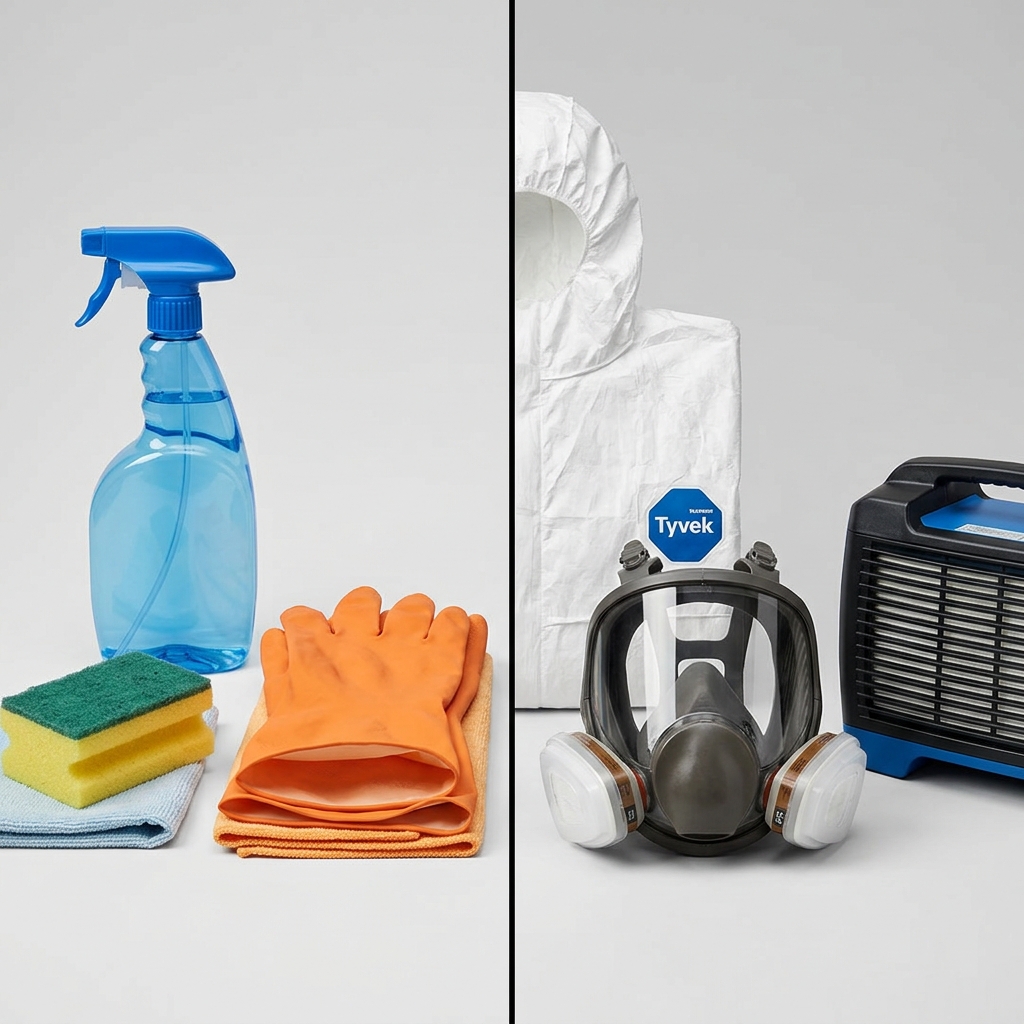
Household cleaners like bleach, hydrogen peroxide, and commercial disinfectants are not designed to address biohazardous contamination. Blood and bodily fluids can carry bloodborne pathogens including Hepatitis B, Hepatitis C, and HIV. These pathogens can remain infectious on surfaces for days — and in dried blood, Hepatitis B can survive on surfaces for up to a week at room temperature. Georgia's warm climate can accelerate bacterial growth, making rapid professional intervention even more critical.
DIY biohazard cleanup exposes you to bloodborne pathogens, may violate OSHA and Georgia disposal regulations, and often leaves behind invisible contamination that continues to pose health risks. Professional remediation is the only safe approach.
Risks of DIY Cleanup by Property Type
The dangers of DIY biohazard cleanup vary by setting, but the core risk — exposure to infectious pathogens — is constant.
- Residential Homes: A family dealing with a trauma incident in a Suwanee home or a blood spill in a Duluth garage may try using household cleaners. Without proper PPE (full-face respirator, Tyvek suit, double nitrile gloves), they risk direct pathogen exposure through skin contact, inhalation, or splashing.
- Apartments and Rentals: Landlords managing properties near Peachtree Corners sometimes attempt cleanup between tenants to avoid costs. This creates liability exposure — if a future tenant becomes ill due to residual contamination, the property owner faces potential legal and financial consequences under Georgia law.
- Offices and Commercial Spaces: Business owners near Windward Parkway may try to handle a small blood spill to avoid disruption. But OSHA's Bloodborne Pathogen Standard (29 CFR 1910.1030) requires that any workplace biohazard exposure be handled with proper training, PPE, and documented cleanup procedures.
The Hidden Contamination Problem
The most dangerous aspect of DIY cleanup is what you can't see. Blood and bodily fluids travel. They seep into carpet padding, subflooring, grout lines, and wall baseboards. In a vehicle, fluids can penetrate seat foam, carpet backing, and interior trim panels. A surface may appear clean after scrubbing, but contamination trapped beneath visible surfaces continues to harbor pathogens and generate odors. Professional biohazard teams use ATP testing, black lights, and specialized detection equipment to identify contamination invisible to the naked eye.
If you've already attempted DIY cleanup on a biohazard scene in your Alpharetta property, don't assume the job is done. Contact a professional team for a post-cleanup assessment. Hidden contamination under flooring, behind baseboards, and in HVAC systems is common even after thorough surface cleaning.
What Professional Biohazard Cleanup Actually Involves
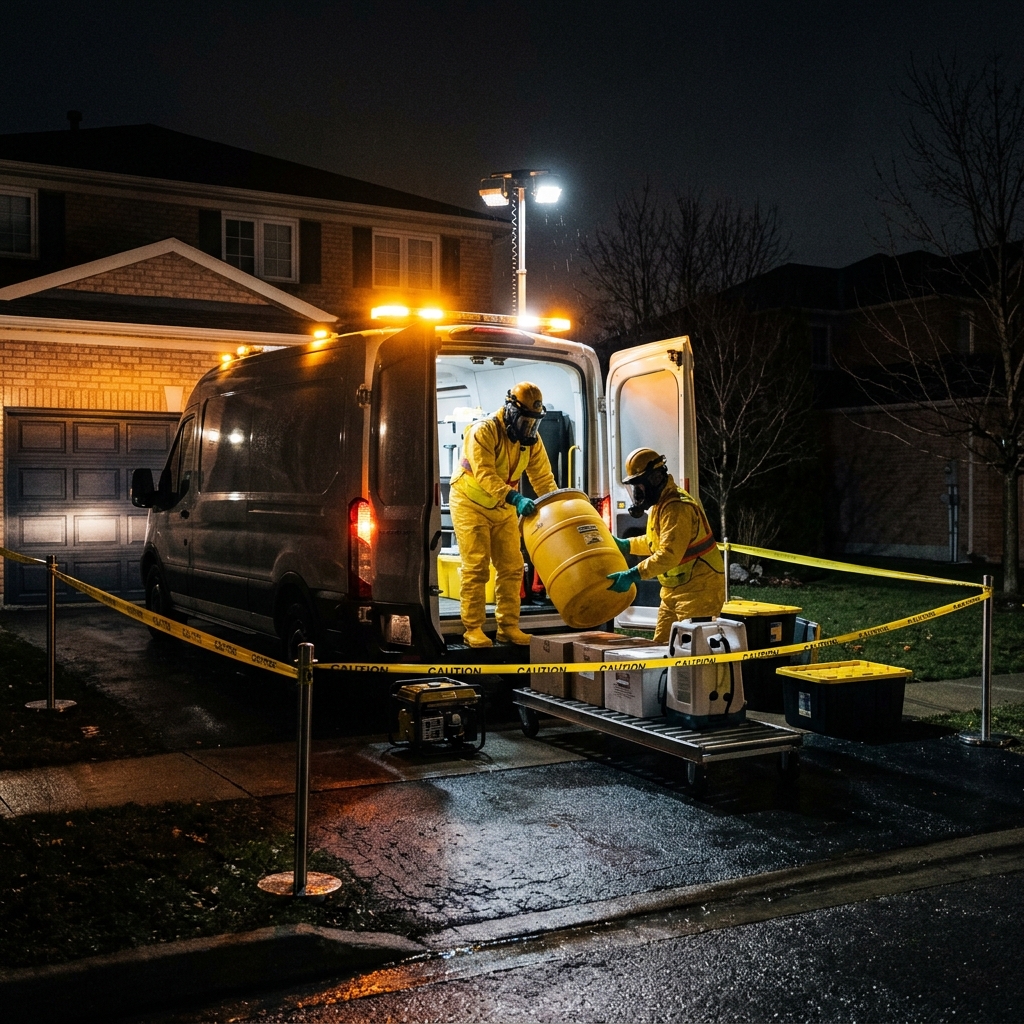
Professional biohazard remediation follows a strict protocol that no DIY effort can replicate. The process begins with a thorough scene assessment, including contamination mapping to identify every affected surface — visible and hidden. Containment barriers are erected to prevent cross-contamination of unaffected areas.
"Every biohazard scene we respond to in Alpharetta has contamination beyond what's visible. In our experience, DIY attempts typically address less than half of the actual contamination — leaving property owners with a false sense of safety and ongoing health risks."
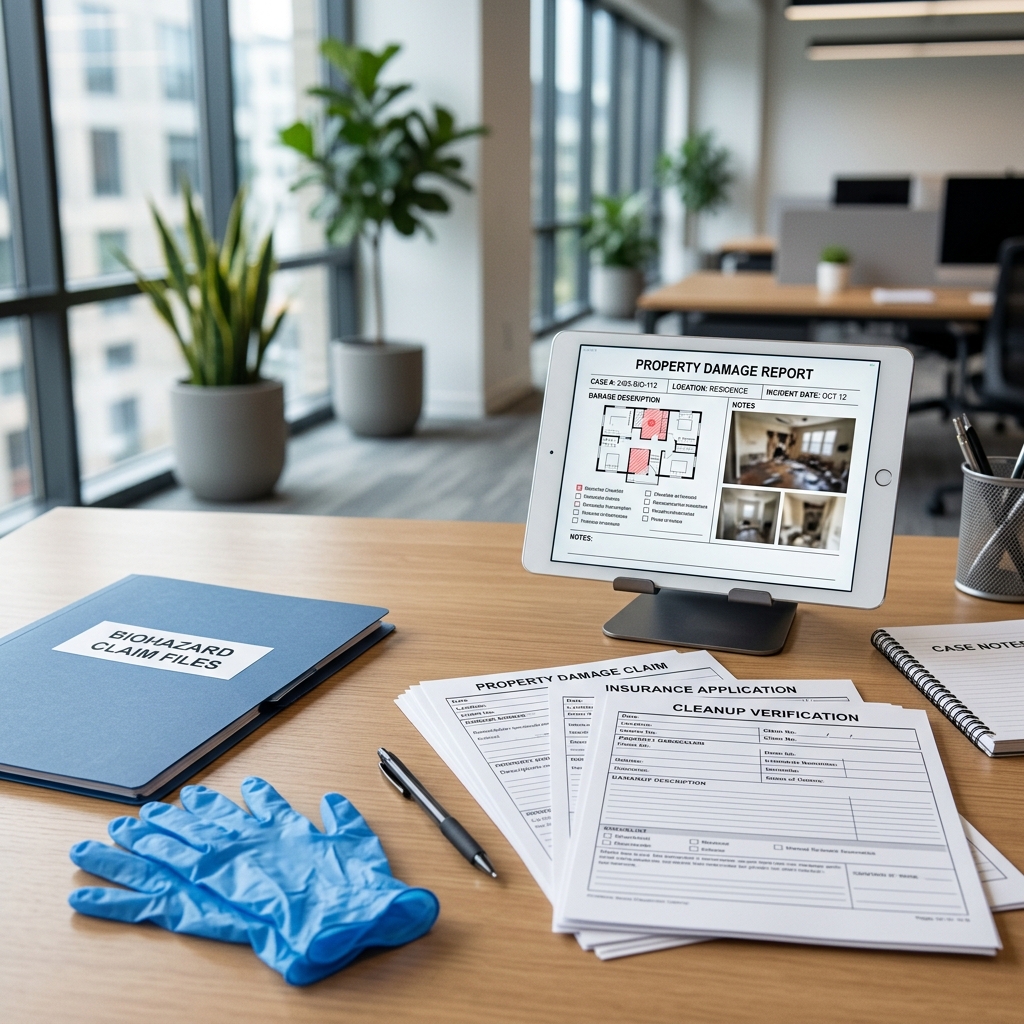
Technicians wearing full PPE then remove and bag contaminated materials for disposal at licensed Georgia facilities. All surfaces are treated with hospital-grade antimicrobial agents, and structural materials are assessed for replacement if contamination has penetrated beyond surface cleaning. Industrial air scrubbers with HEPA filtration address airborne contaminants, and final clearance testing verifies that the property meets safety standards. The entire process is documented with photos, reports, and disposal manifests — creating a complete record for insurance claims and legal compliance.